What are the best AI marketing tools every marketer should know about?
The AI Marketing Tools I Actually Use, Not Just The Ones Everyone Talks About
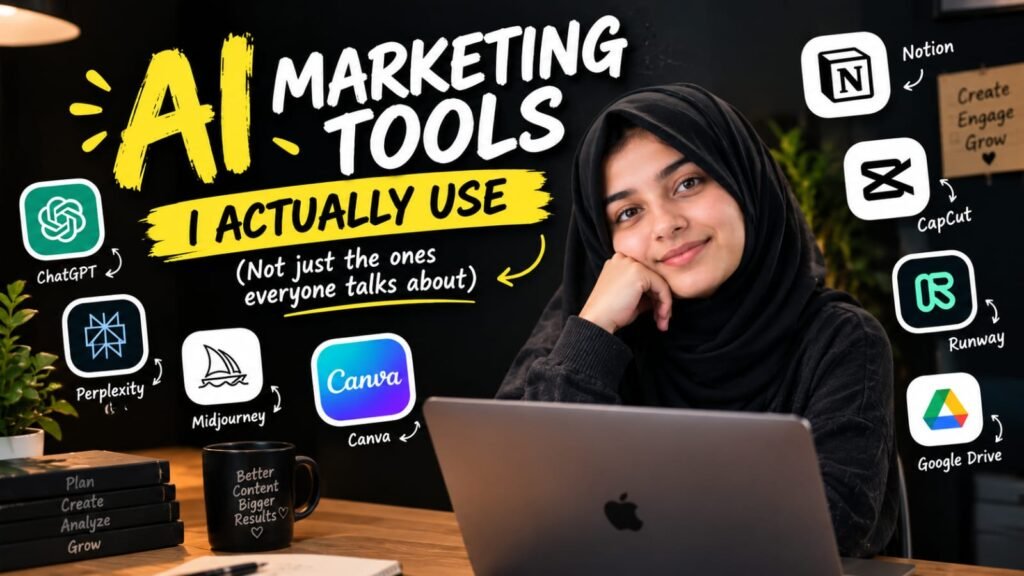
Every other week someone messages me asking which AI tools they should learn for marketing. Usually they’ve already seen some list online with fifty tools and no clue which ones actually matter day to day. So let me just tell you what I actually open on my laptop every single day, based on running campaigns for real small businesses here in Malappuram, not from reading someone else’s blog post.
The first one, and honestly the one I lean on the most, is ChatGPT. Not for anything fancy, just for the boring first draft work. When a client wants ten caption options for a new gold collection launch, I don’t sit and stare at a blank page anymore. I give it the product details, the tone the client wants, maybe a note that it needs to sound natural in a Malayalam-English mix, and I get a starting point in seconds. I still rewrite most of it because the local touch is something I have to add myself, but going from zero to something is where most of the time used to get wasted. That part is gone now.
Second, and this one surprised me when I first started using it seriously, is Canva’s AI features. A lot of small shop owners in Malappuram don’t have money for a proper designer for every single post. Canva’s background remover, the magic resize for different platforms, the AI-generated design suggestions, all of that has genuinely saved me hours every week. I remember spending almost an entire afternoon resizing one poster for Instagram, Facebook, and WhatsApp status separately. Now that’s done in a couple of minutes.
Third is Google’s own AI inside Google Ads, specifically the automated bidding and the responsive search ads feature. When I first started managing ad accounts, I used to manually adjust bids every single day, checking which keyword was performing and which wasn’t. It was exhausting and honestly I wasn’t even that good at it compared to what the algorithm can now do on its own once you feed it the right goals. I still keep an eye on it, I don’t just set it and walk away, but the heavy lifting of bid adjustment is something I trust the system with now.
Fourth, Meta’s Advantage+ campaigns. I was skeptical of this one for a long time because I like having control over exactly who sees an ad. But after testing it properly on a client’s clothing store account, comparing it against my own manually built audiences over a full month, the automated version actually performed better and cost less per result. That was a humbling moment for me honestly, realizing the machine was doing a better job of finding the right audience than I was doing manually.
Fifth is a tool called Otter for transcribing client calls and voice notes. This one isn’t glamorous at all but it’s saved me so many misunderstandings. A client in Kondotty once explained exactly what he wanted over a fifteen minute voice note in fast Malayalam, and instead of listening to it three times trying to catch every detail, I ran it through and got a clean transcript I could refer back to while building his campaign brief.
Sixth, and this is more recent for me, is using AI inside Google Analytics and Search Console to spot patterns I would have missed manually. For one client’s website, it flagged that most of the traffic drop was happening specifically on mobile during evening hours, something I genuinely hadn’t noticed scrolling through the numbers myself. Once we knew that, fixing the mobile loading speed made a real difference within two weeks.
Now here’s the honest feedback part, because I don’t want this to sound like I think these tools are magic. Every single one of these needs a person who actually understands the business behind the account. I’ve seen people plug a product description into ChatGPT, copy the output word for word, and post it without checking if it even makes sense for a Malappuram audience. That kind of shortcut is obvious to anyone who actually knows the local market, and it doesn’t work. The tool gave them speed, not judgment.
The other thing nobody tells beginners is that these tools change constantly. What I was using a year back for ad copy generation has already been updated twice with new features I had to relearn. So the actual skill isn’t memorizing how one tool works today, it’s staying curious enough to keep testing new updates and figuring out what’s actually useful versus what’s just a new button nobody needs.
If you’re starting out and feel overwhelmed by every new AI tool that gets announced, my honest advice is don’t try to learn all of them at once. Pick one that solves an actual problem you’re facing right now, get properly comfortable with it, and only then move to the next. I didn’t learn all six of these together, it happened over almost two years of actually running campaigns and hitting walls that each tool eventually solved.
The tools are genuinely powerful, more powerful than anything we had access to a few years back. But the businesses that actually win with them are the ones where a real person is still making the final call, still understanding the customer sitting right there in front of them, and using the tool to move faster, not to replace that understanding altogether.